NYMEX Heating Oil (ULSD) Futures and Options Trading
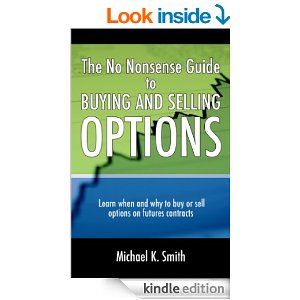
Learn the most effective strategies for buying and selling
options on futures contracts. Also learn producer and consumer
hedging strategies.
*The information contained within this webpage comes from sources
believed to be reliable. No guarantees are being made to the
content's accuracy or completeness.
The History of Heating Oil and Heating Oil Futures Market
The market for heating oil, also known as No. 2 fuel oil, today known as ultra
low-sulfur-diesel (ULSD), grew rapidly after
World War II, as homeowners and builders switched from coal. Heating oil is very
similar in chemical makeup to diesel fuel. Over the last 20 years, the sulfur
content of heating oil has been reduced and today's heating oil is 95% cleaner
than it was in 1970.
Heating Oil accounts for almost 25% of the yield of
a barrel of crude oil, the second largest "cut" of the
barrel after unleaded gasoline. The price to
consumers of home heating oil is usually comprised of approximately 42% crude
oil, 12% from refining costs, and 46% for marketing and distribution costs. Heating oil futures has
become one of the premiere distillate contracts in
future trading. During the September terrorist
attacks on the World Trade Center the NYMEX was
destroyed but within 3 days the heating oil futures
and heating oil options contracts were being traded
again. This is a testament to the strength and
viability of the energy future markets.
Heating oil has the energy output of 138,690 BTUs per gallon.
Natural gas has 99,000 BTUs per therm. It takes 1.4 therms to equal
the heat output of one gallon of heating oil.
Are you a
heating oil hedger? If so,
click here to learn more.
Heating Oil Options on Futures Contracts Explained
A heating oil call option gives the purchaser the
right but not the obligation to purchase the underlying futures
contract for a specific time period and a specific price (strike
price). Let's say that you wanted to purchase a May heating oil $1.50 call option
and pay a premium of $1,200.
This means that you bought the right but not the obligation to buy
42,000 gallons of May heating oil for $1.50 per gallon. Of course,
very few options are bought for the purpose of taking delivery but
that is one potential outcome. Chances are that you either bought
the heating oil option to hedge your price risk in the physical
coffee market (you may be a heating oil producer or heating oil end
user) or maybe you are speculating that heating oil prices will go higher in an attempt to make
a profit.
A heating oil put option gives the purchaser the
right but not the obligation to sell the underlying heating oil
futures contract for a specific time period and a specific price.
Let's say that you wanted to buy a May heating oil $1.30 put option and pay a premium of
$1,300.
This means that you have the right but not the obligation to sell
42,000 gallons of May heating oil at $1.30 per gallon.
What is the delta factor?
The delta factor of an option represents the estimated percentage of
change an option will receive based on the movements in the
underlying futures contract.
Let's assume the May heating oil call option above has a 30% delta
factor. This means that if the underlying futures contract were to
rally by $1,000, then the call option would accrue by approximately
$300 or 30% of $1,000 in the May heating oil futures contract.
What is theta?
Options are wasting assets which means that they lose value as time
passes. The theta of an option is the measure of time decay.
Let's assume that you bought a May heating oil $1.50 call option
with 60 days left until expiration. Let's also assume that the
heating oil
futures prices have moved very little over the last month and are
exactly the same price 30 days later. Your option will have lost 30
days worth of time and therefore will be worth less today that it
was when it had 60 days left until expiration.
What is vega?
Vega is a measure of the implied volatility of an option contract as
it relates to its underlying futures contract. For instance, if the
underlying future contract is extremely volatile then the implied
volatility of the options of that futures contract will be affected.
In a high implied volatility environment option premiums tend to
expand. Conversely, in a low implied volatility environment the
option premiums tend to decrease.
Here is the energy products brochure courtesy of the CME
Group.
Energy Brochure
*Contract information changes from time to time. Please
click here to see the most recent
contract specifications and
click here for the most recent trading hours.
NYMEX Division Heating Oil Futures and Options
Contract Specifications
Trading Unit
Futures: 42,000 U.S. gallons (1,000 barrels).
Options: One NYMEX Division heating oil futures
contract.
Price Quotation
Heating Oil
Futures and Options: In dollars and cents per
gallon: for example, $0.7527 (75.27¢) per gallon.
Trading Hours
Heating Oil
Futures and Options: Open outcry trading is
conducted from 9:00 A.M. until 2:30 P.M.
After hours heating oil futures trading are conducted via the GOLBEX internet-based trading platform
beginning at 3:15 P.M. on Mondays through Thursdays
and concluding at 9:30 A.M. the following day. On
Sundays, the session begins at 7:00 P.M. All times
are New York time.
Trading Months
Heating Oil
Futures: Trading is conducted in 18 consecutive
months commencing with the next calendar month (for
example, on January 2, 2002, trading occurs in all
months from February 2002 through July 2003).
Heating Oil
Options: 18 consecutive months.
Minimum Price Fluctuation
Heating Oil
Futures and Options: $0.0001 (0.01¢) per gallon
($4.20 per contract).
Maximum Daily Price Fluctuation
Heating Oil
Futures: $0.25 per gallon ($10,500 per contract) for
all months.
Heating Oil
Options: No price limits.
Last Trading Day
Heating Oil
Futures: Trading terminates at the close of business
on the last business day of the month proceeding the
delivery month.
Options: Trading ends three business days before the
underlying futures contract.
Exercise of Options
By a clearing member to the Exchange clearinghouse
not later than 5:30 P.M., or 45 minutes after the
underlying heating oil futures settlement price is posted,
whichever is later, on any day up to and including
the option's expiration.
Options Strike Prices
Twenty strike prices in one-cent-per-gallon
increments above and below the at-the-money strike
price, and the next ten strike prices in five-cent
increments above the highest and below the lowest
existing strike prices for a total of at 61 strike
prices. The at-the-money strike price is the nearest
to the previous day's close of the underlying
heating oil futures contract. Strike price boundaries are
adjusted according to the futures price movements.
Margin Requirements
Margins are required for open futures or short
options positions. The margin requirement for an
options purchaser will never exceed the premium.
Trading Symbols
Futures: HO
**Click Here Now!
for actual heating oil futures and options quotes, prices, expirations, charts .....
To learn more about the energy futures visit
unleaded gas futures,
crude oil futures and
natural gas futures.
SITE MAP |